
Regenerating the surface of sight.

ReGenTree · ReGenTree, LLCRENEWAL PROPOSAL 2026
Clear,again
Homepage renewal proposal for ReGenTree, an ophthalmic new drug company that rebuilds the surface of the eye
Eight sketches in January · Design proposal in February · Design proposal in October
01 · SURFACEThe outermost layer of the eye, the corneal epithelium
Five to seven layers of cells cover the surface of the eye
02 · DROPOne drop carrying Tβ4
RGN-259 is an eye drop containing 0.1% Tβ4
03 · HEALCells cover the gap again
Tβ4, drawn in gold, gathers in the wound as cells at the edge slide inward
04 · CLEARA surface clear again
ReGenTree develops eye drops that support this recovery
The eye, cells and wound in the film illustrate the principle. They are not clinical results.
01 / OVERVIEWProject Overview
A company rebuilding
the surface of the eye
ReGenTree, LLC is a U.S. joint venture founded by HLB Therapeutics of Korea and RegeneRx of the United States. It makes the eye drop RGN-259 from Tβ4 (thymosin beta 4), a peptide the body already produces, and has run Phase III trials in the United States for neurotrophic keratopathy, a rare disease in which the cornea cannot heal on its own, and for dry eye disease.
The current website contains the company's research and clinical trials divided into six English menus. We proposed a renewal design three times from January to October 2026. This page is a record of the name, logo, color, font, and three design proposals that were considered during the process from start to finish.
- 43Amino acids that make up Tβ4The number listed in the description of Tβ4 on the company site
- 0.1%Tβ4 concentration of RGN-259Concentration stated in the participation notice for phase 3 clinical trial
- 35placesSEER-2 clinical sitesAcross the U.S. · Based on home screen notice
- 10First screen created three timesEight sketches in January · February · October
02 / STARTING POINTStarting point
DWG NO. RGT-HOME-01regentreellc.com · HOMESCALE 1:2
Who We ArePipelineTβ4PatientsNews & PRContact UsFamily Site ▾④
ReGenTree, LLCDevelopment of innovative new drugsPursuit in the quality of the life and happiness
②About ReGenTreePipelineNews & PR③
Copyright ⓒ ReGenTree, LLC All Rights Reserved
Click for more details
☑ No thanks, return to site
①- ①Clinical participation information pop-upSEER-2 clinical trial phase 3 participation information · Window covering the center of the first screen
- ②One main photoTwo lines of company name and sentence above a photo of children on the lawn
- ③Three boxesAbout ReGenTree · Pipeline · News & PR
- ④Family Site19 links to HLB Group affiliates
- 01The strongest truth was inside
Facts such as the U.S. FDA's orphan drug designation and Phase 3 clinical trials are scattered across the pages under Pipeline and Patients. Just by looking at the first screen, it was difficult to know that this company makes medicine for the eyes.
- 02An eye-care company with no eye on its first screen
The large picture on the first screen is of children lying face down on the lawn. It's a heartwarming photo, but the actual subjects the company deals with, such as corneas, tears, and eye drops, are never shown.
- 03No screen for mobile phone
There is no setting (viewport) that tells the screen width, so the PC screen is displayed in a reduced size on the mobile phone. Visitors must use their fingers to read the small text.
- 0450 news stories in two languages
The News & PR bulletin board mixes RegeneRx's English shareholder letter and article titles from Korean media in one list. Each article needed a sign to indicate where the news came from.
03 / NAMEname
Where two company names
overlap
ReGenTree is a joint venture that has been developing RGN-259 in the United States since January 2015. Korea's HLB Therapeutics is responsible for clinical trials and development, and America's RegeneRx has provided intellectual property and research data on Tβ4. If you read the name slowly, you will see that the names of both companies are in one word.
- 01Regen by RegeneRx
RegeneRx is a U.S. company that has researched therapies built on Tβ4. The first part of its name stands for regeneration. It contributed its Tβ4 intellectual property and the research data gathered so far to ReGenTree.
- 02Tree by GtreeBNT
HLB Therapeutics was formerly called GtreeBNT. Holding a major equity stake in ReGenTree, it conducts and funds all clinical trials and product development.
- 03Re · Gen · Tree
Read the two names together and what remains is a tree (Tree) that grows (Gen) again (Re). We took the name as the starting point of a story about “a clear surface that grows back.”
04 / LOGOlogo
Two arcs
with the same curvature
The logo consists of dark red slanted letters and two arcs passing over them. Currently, there is only one 186px wide GIF left on the site, so when you enlarge it on the screen, the edges break like steps.
While building the October proposal, we redrew this GIF as vectors and read how the two arcs relate by fitting the redrawn lines to circles.
REGENTREE LOGO · GIF 186 × 51 px01 / 04
- 01Original GIF · 186×51px · 256 colors
- 02Outline redrawn as vector
- 03Circle where the upper lines of two arcs lie
- 04Logo repainted
- 01
Two layers of the same curvature
The top lines of the two arcs lie on circles with radii 0.74 and 0.75 times the width of the logo. It's almost the same circle overlapped slightly. We read these two layers as the cornea and the tear film that covers it.
- 02
arc surrounding letters
The lower arc extends from the left to the height of the bottom of the letter, and the upper arc extends from the right to the height of the letter's waist. It looks like two arcs embrace the letters from above.
- 03
From teal to blue
The color of the arc spreads from cyan (#1FAFCD) on the left to blue (#1189C4) on the right. In the original GIF, 1,789 blue pixels were divided into three sections and averaged.
- 04
Red in letters #971A26
The letters are colored in one shade of red. In the eyes, red is also the color of redness and inflammation, so in the design, we decided not to bring this red out of the logo.
- blank
Leave an empty space around the logo equal to the height of the letters. If the end of an arc touches another element, the direction of the curve is not read.
- minimum size
On screen, never use the logo narrower than 96px. Any smaller and the thickest part of the upper arc drops below 4px.
- dark background
On a dark background, change only the text to white and leave the cyan and blue of the arc as is. Red letters lack brightness contrast on a dark background.
05 / MOODMood
Transparency, recovery,
precision
Before drawing any proposal, we chose three words to describe ReGenTree: transparency as clear as the surface of the eye, recovery as a wound closes on its own, and the precision of Phase III trials.
We created new scenes matching the three words and collected them on one board. If you click on a word below, only the scenes corresponding to that word will remain.


The photo on the board is a newly created scene to set the mood. These are not photos of actual products, facilities, or patients.
06 / COLORColor
Colors taken
from eye-exam light
At the ophthalmology clinic, the eyes are examined under different lights. Look at the entire thing with white light, and use blue light with a cobalt filter to find the wound where the fluorescent dye has accumulated. We took the color of renewal from the light of this eye examination.
-
01 · WHITE LIGHT
See the whole thing in white light
First, look at the entire eye and surface texture using white light. The background of the bright scene and the text of the text were selected in this light.
-
02 · COBALT BLUE
Find wounds with blue light
When blue light is shined through a cobalt filter, scratches on the surface are revealed. The background and accent colors for dark scenes were chosen from this light.
-
03 · FLUORESCEIN
Green indicates a wound
Fluorescent dye accumulates where cells have fallen and glows green. On the screen, green is used only in areas that require attention, such as the stage of a disease.
-
04 · AMBER
Amber is a sign of recovery
The October design drawing depicted Tβ4 flowing into the wound with golden particles. Amber is only used for Tβ4 and healing scenes.
LOGO COLORSColors from the logo
-
Logo letters only
Red is the most used color in the original GIF. It is not used outside of the logo.
-
left end of arc
The October design proposal is the value chosen from the left side of the original arc. The average of the left section of the original GIF is #1FAFCD.
-
Right end of arc · Link with light background
It is blue on the right where the arc ends. This is the brightness that can be used as a link color on a white background.
RENEWAL COLORSScreen colors in October design
-
dark scene background
It is a navy blue, close to the darkness after the cobalt light is turned off.
-
Card · Overlapping sides
This is the color of the side that has one layer on top of the ink.
-
Dark background highlight · link
This is the color where the borders of cells shine under cobalt light.
-
Tβ4 · Healing scene
It is a gold color depicting peptides flowing into the wound.
-
background for bright scenes
It is the basis for scenes that can be read for a long time, such as clinical tables and histories.
ADDEDColors added in this arrangement
-
Caution / Injury indication
This is the color added in this roundup. Use only where caution is needed, such as the stage of the disease.
INK → PAPERTen steps from ink to paper. Connect dark and bright scenes with the same color family.
PairSampleBrightness contrast ratioJudgment
Logo red · white backgroundAa Tβ4 0.1%8.4:1Pass · Text standard
Logo red · Ink backgroundAa Tβ4 0.1%2.3:1Lack · Picture standard
Wonho blue · white backgroundAa Tβ4 0.1%4.5:1Pass · Text standard
Wonho Cyan · Ink BackgroundAa Tβ4 0.1%7.8:1Pass · Text standard
Cyan emphasis · Ink backgroundAa Tβ4 0.1%11.5:1Pass · Text standard
Amber · Ink backgroundAa Tβ4 0.1%11.5:1Pass · Text standard
Fluorescent green · Ink backgroundAa Tβ4 0.1%15.2:1Pass · Text standard
Dark blue letters · Paper backgroundAa Tβ4 0.1%15.9:1Pass · Text standard
Blur text · Ink backgroundAa Tβ4 0.1%8.1:1Pass · Text standard
WCAG brightness contrast. The standard was 4.5:1 for text and 3:1 for images such as logos and large text.
- 01Red is only in the logo
In the eyes, red brings to mind redness and inflammation. #971A26 in the logo letters is not used as a button or accent color.
- 02Green only refers to wounds
Fluorescent green is the color that reveals scars on ophthalmic examinations. It is only used to indicate the stage of a disease or a number requiring attention.
- 03Amber is the color of Tβ4
Amber is used only for peptide Tβ4, which aids recovery, and for healing scenes. We made sure that the same color was not used with different meanings.
- 04The main text is 4.5:1 or higher with the background.
Text on a dark background is written in white, and text on a light background is written in navy blue, exceeding 4.5:1 for the brightness of the text.
07 / TYPEtypeface
From eight typeface pairs
to three roles
The eight sketches from January were written in a different font for each page. The serif titles were classy, but didn't have the right weight for clinical-level, high-number screens.
The October design proposal divided the fonts into roles. The English title is by Inter Tight, the Korean text is by Pretendard, and the data and steps are displayed by JetBrains Mono.
- 01Inter
- 02Playfair Display + Outfit
- 03Space Grotesk
- 04Instrument Serif + DM Sans
- 05Cormorant Garamond + Montserrat
- 06Plus Jakarta Sans
- 07Lora + Nunito Sans
- 08Sora
- OctoberThree Roles
Rebuilds the surface of the eye.
Pretendard
RGN-259 · PHASE III · 0.1%
JetBrains Mono
Notation rules
Tβ4Beta is written as the Greek letter β. It is not abbreviated to Tb4 or TB4.
RGN-259Program names are grouped together to avoid line breaks at hyphens.
Phase IIIClinical stages are standardized using Roman numerals. Phase 3 and Phase III are not mixed within one site.
0.1%Write a concentration with its number and unit together, and keep the zero before the decimal point.
Tβ4 · THYMOSIN BETA 443 AMINO ACIDS
08 / STRUCTUREstructure
From the eye to the molecule,
ordered by magnification
The current menu on the site follows the order organized by the company, from Who We Are to Contact Us. The October design proposal rewrote the story in the order in which visitors looked closer and closer.
Magnification increases from the entire eye to the cornea, from the cornea to the epithelial cells, and from cells to peptides. Visitors who understand a disease naturally reach out to molecules and drugs that cure the disease.



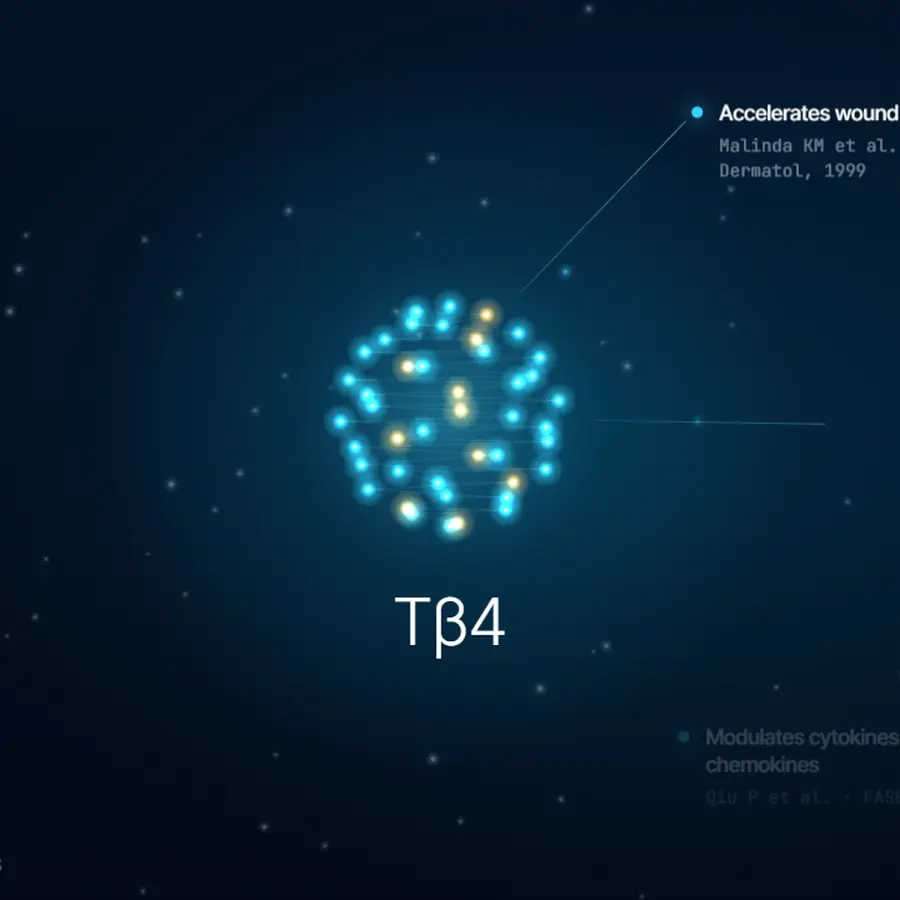
- ×1Eye EYE · Diameter approx. 24 mm
It starts with the patient and the disease. First, let’s talk about what diseases neurotrophic keratopathy and dry eye disease are.
- ×10Cornea CORNEA · Thickness approx. 0.5 mm
It is a transparent window in front of the eye. The three stages of the disease and the four layers of the tear film are shown at this magnification.
- ×100Epithelium EPITHELIUM · Thickness approx. 50 µm
It is the outermost layer of the cornea. It shows the principle of healing by covering wounds at the cell level.
- ×10⁵peptide Tβ4 · 43 amino acids
It is a molecule that aids healing. It leads to the action of Tβ4 and RGN-259, an eye drop containing it.
NOWSix menus now
- Who We Are
- Pipeline
- Tβ4
- Patients
- News & PR
- Contact Us
OCTOBERFourteen scenes in the October design proposal
- 01From eyes to cells
- 02Mission
- 03Neurotrophic keratopathy (NK)
- 04Dry Eye Syndrome (DED)
- 05Tβ4
- 06Healing
- 07RGN-259
- 08Pipeline
- 09History
- 10Rights Area
- 11Two companies
- 12Patients
- 13News
- 14Inquiry
A line shows where the contents of the left menu moved to the center of the right scene. When you click on a menu name, only the corresponding line remains. The current bulletin board address and 50 pieces of news will continue as the original posts in the October design.
09 / LABlaboratory
Draw how a wound
gets covered
The corneal epithelium is a thin layer of five to seven cells. When a wound occurs, the edge cells first move to cover the empty space, and then divide to fill the thickness.
If you rub the bottom screen with your finger or mouse, a scratch will appear. When you let go, you can see the surrounding cells covering up again.
STAINED 0.00 mm²COVERED 100%
- 01Pause
In the hours immediately following a wound, the marginal cells prepare to move.
- 02Migration
The marginal cells flatten and slide into the empty space.
- 03Proliferation
Once the empty space is covered, the cells divide to fill the space again, five to seven layers thick.
- 04Attachment
Once the new cells have firmly attached to the underlying layer, the surface becomes smooth and transparent again.
ReGenTree explains that Tβ4 helps corneal epithelial cells migrate (Pipeline page on the company's site). The speed and shape of the lab are illustrative of the principle and do not indicate the effectiveness of the drug.
ROUND 1 · 2026.01Eight first sketches
Eight first screens
in different outfits
In January we made eight first screens that kept the structure and changed only the colors and typefaces. They were sketches for choosing which outfit makes the same content look like ReGenTree.
When you hover your mouse over a card, the entire page of that sketch flows from top to bottom.
-

01CLINICAL BLUE
Inter
This is the most familiar face of a pharmaceutical company. The February design proposal started from this chapter.
-

02EDITORIAL TEAL
Playfair Display · Outfit
The slanted serif titles and teal edition made it look like a magazine.
-

03NEON NIGHT
Space Grotesk
The dark background and pink/purple gradient made it look like a tech company.
-

04FOREST SERIF
Instrument Serif · DM Sans
The dark green and thin serifs were subdued, but felt more like cosmetics than ophthalmology.
-

05NAVY & GOLD
Cormorant Garamond · Montserrat
The navy and gold colors were classy, but far from the clinical corporate tone.
-

06WARM CORAL
Plus Jakarta Sans
It was warm, but the orange and red in the eyes first reminded me of bloodshot eyes.
-

07SAGE GROWTH
Lora · Nunito Sans
The feel of the growing tree was captured best, but the clarity of the science was weak.
-

08BRIGHT SCIENCE
Sora
The white cards and blue accents looked the most organized.


What eight sketches
taught us
Laid side by side, the eight sketches shared the same problems under different outfits. The February proposal started by fixing these three.
- 01empty eye icon
All eight cards had the same eye icon in place of the picture. Although the space for the actual scene was left empty, the most important picture was missing from the ophthalmology company's first screen.
- 02baseless numbers
It contained unconfirmed numbers like 12+ Partners. From the February design proposal onwards, we only used numbers confirmed on the company website and official data.
- 03same skeleton
The colors and fonts were different, but the framework was the same: the title on the left, the picture on the right, and the three numbers below. ReGenTree's unique story could not be created just by changing clothes.
Second proposal · 2026.02
CLINICAL WHITEClinical corporate site with white background
We moved January’s first sketch onto a white background and turned it into one complete page. Seven sections hold, in order, the company introduction, Tβ4, the development stages of RGN-259, information on the two diseases, news and contact.
- Home screen with pictures of children instead of eye icons
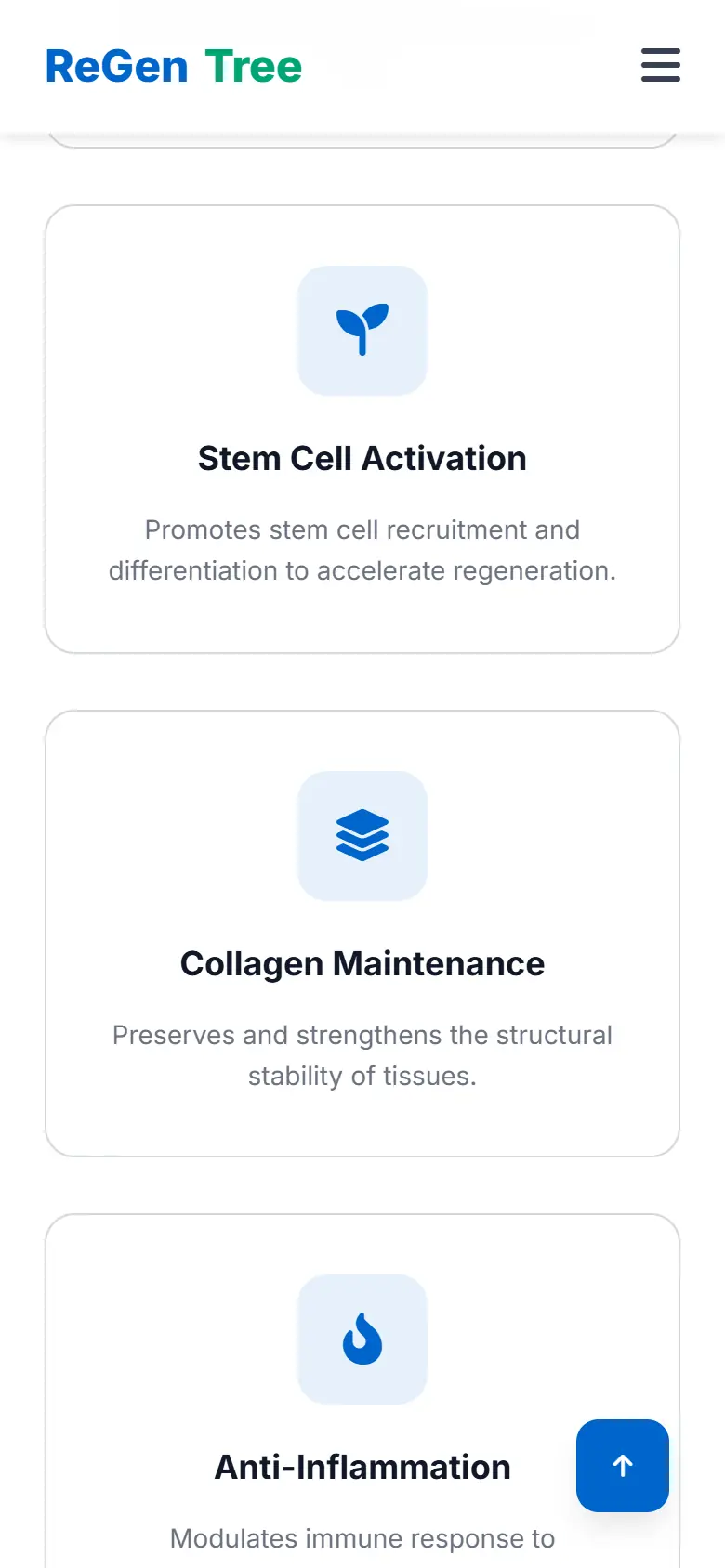
- A card summarizing the six actions of Tβ4
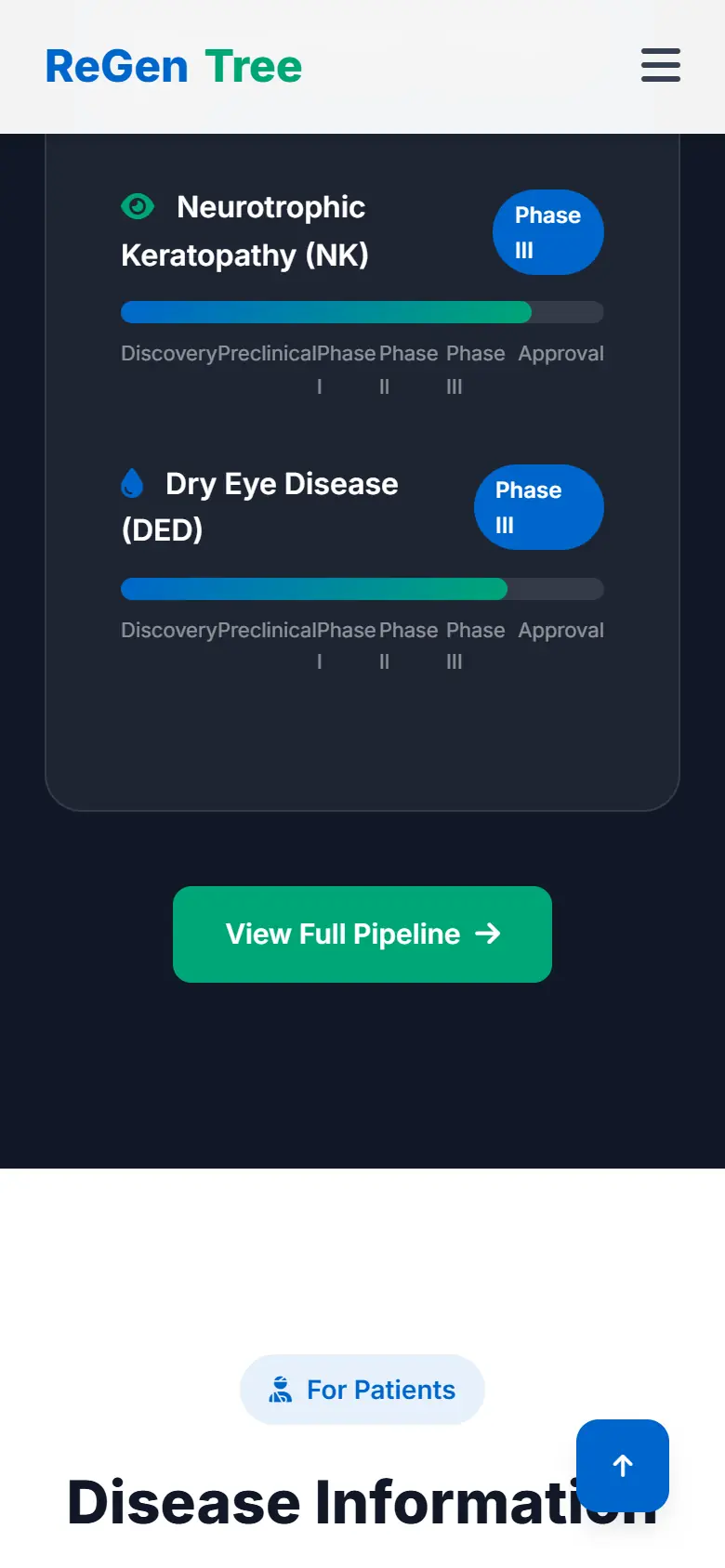
- The development stages of both indications are indicated by bars.
- Neurotrophic keratopathy and dry eye disease information card
- Links that organize HLB Group affiliates in one line
Inter
DIRECTION NOTES
We picked the moments in ROUND 2 whose direction took the most care. Click a picture to see each scene larger.
- Home screen with a photo
We replaced the sketch’s eye icon with a photo of children and brought up confirmed facts such as the Phase III trials and the FDA designation.
- Six Tβ4 action cards
We organized the actions of Tβ4 that were scattered around the company's site into six cards of the same shape.
- development stage bar
The stages of RGN-259's two indications are shown by the bars on the dark plate.
- Information on both diseases
Compare the symptoms and characteristics of neurotrophic keratopathy and dry eye disease using side-by-side cards.
CLINICAL WHITE PALETTERatio of close pixels for each color in 24 PC screen scenes · Blue is only present in 2.2% of the screen
R2 · CLINICAL WHITEIf the February proposal introduced the company,
R3 · SURFACE OF SIGHTthe October proposal goes inside the eye
Third proposal · 2026.10
SURFACE OF SIGHTScroll down to the surface of the eye.
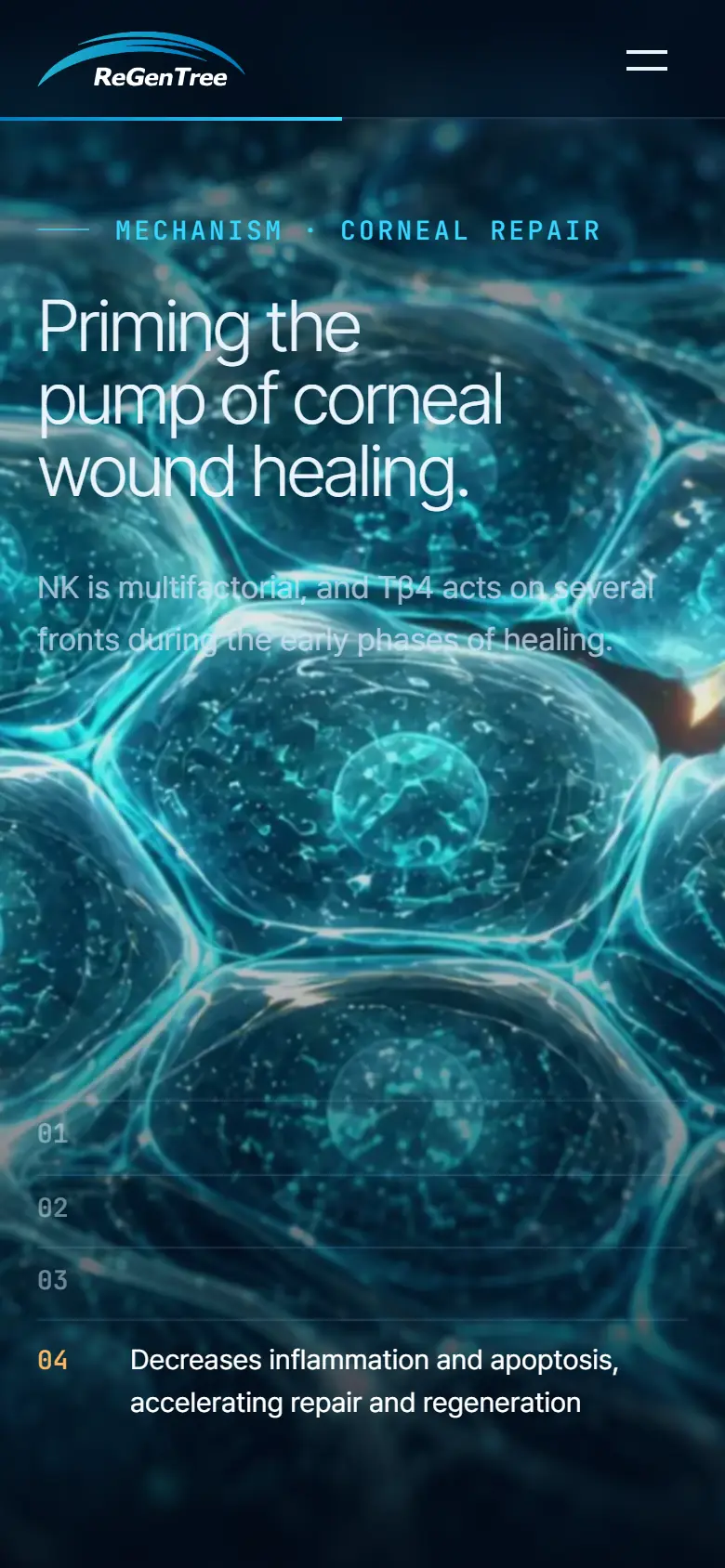
It starts with a close-up of the eye, goes into the corneal epithelial cells, and continues through 14 scenes in the following order: disease and molecules, healing and eye drops, and clinical and corporate. Videos and pictures move in accordance with the scrolling of each scene.
- The first screen of the eye passing through the pupil and light tunnel into the epithelial cells.
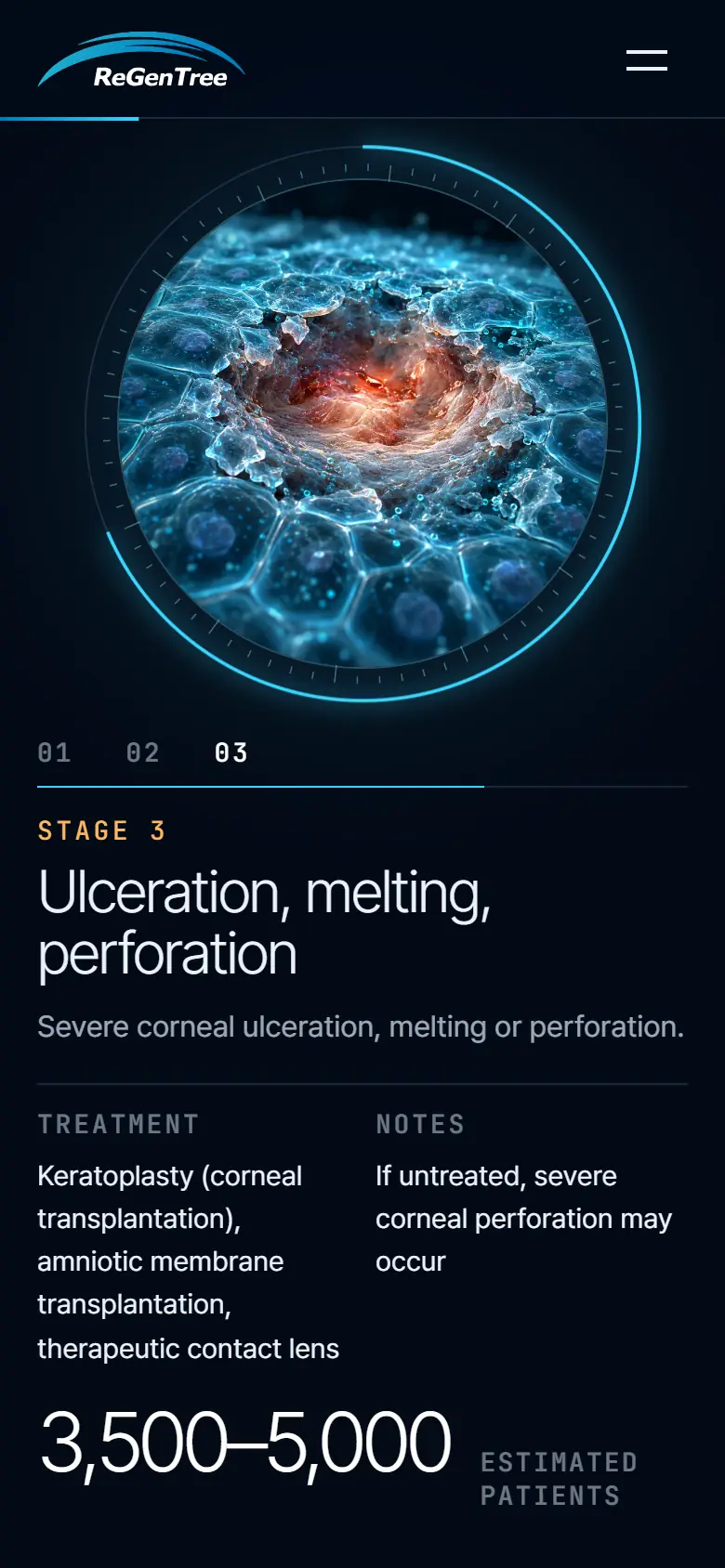
- Neurotrophic keratopathy changes within the lens, stages 1 to 3
- Lipid, aqueous, mucin, surface, four-layer tear film
- Tβ4 made from 43 amino acids and six functions
- 8 clinical cards, stipple map of rights areas and overlapping logos for both companies
Inter Tight · Pretendard · JetBrains Mono
DIRECTION NOTES
We picked the moments in ROUND 3 whose direction took the most care. Click a picture to see each scene larger.
- First screen starting from the eyes
Scroll through 121 frames leading to the eye → pupil → tunnel of light → corneal epithelium.
- Stage of disease in the lens
Within the circular lens, the corneal picture, symptoms, and treatment for stages 1 to 3 change together.
- A four-layer tear film
The lipid, aqueous, and mucin layers of the tear film and the surface of the eye spread out like a decomposition map and shine according to each type.
- Tβ4 of 43 amino acids
43 scattered amino acids gather together to form a helix, which is compressed into a core and performs six functions.
- gold covers the wound
This video shows golden peptides flowing into the wound area and the red wound becoming covered with cells.
- a drop falling
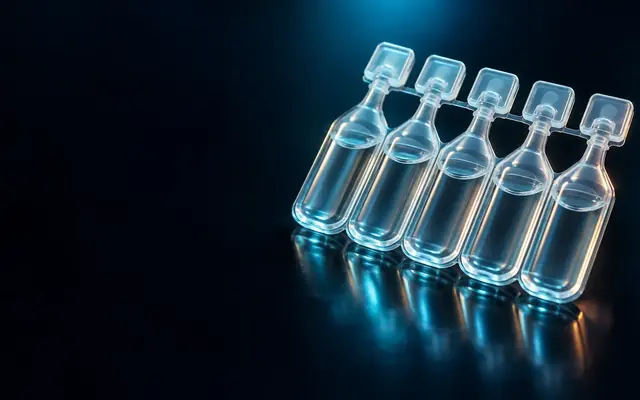
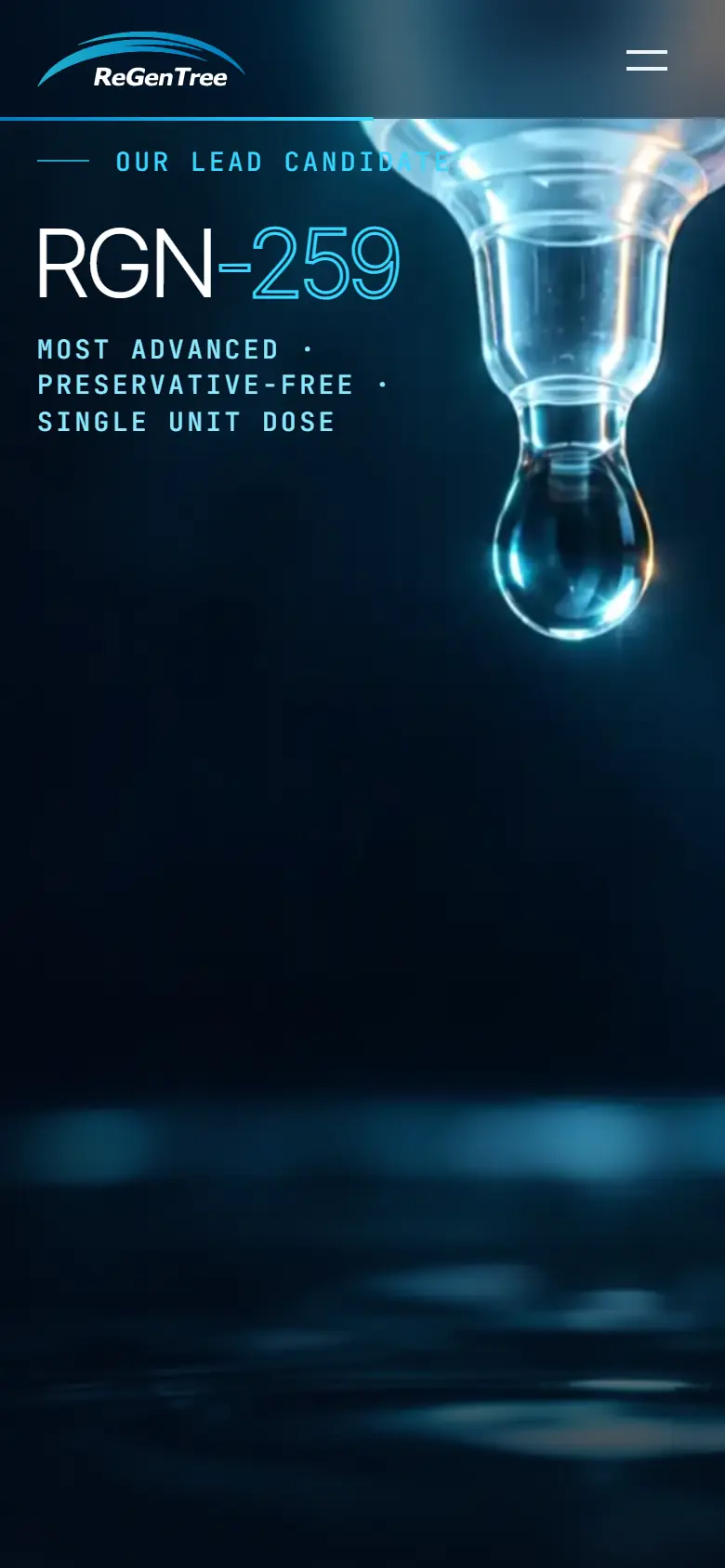
A drop of water falls from a disposable eye drop container, from which point it passes onto a bright screen.
- rights area stipple map
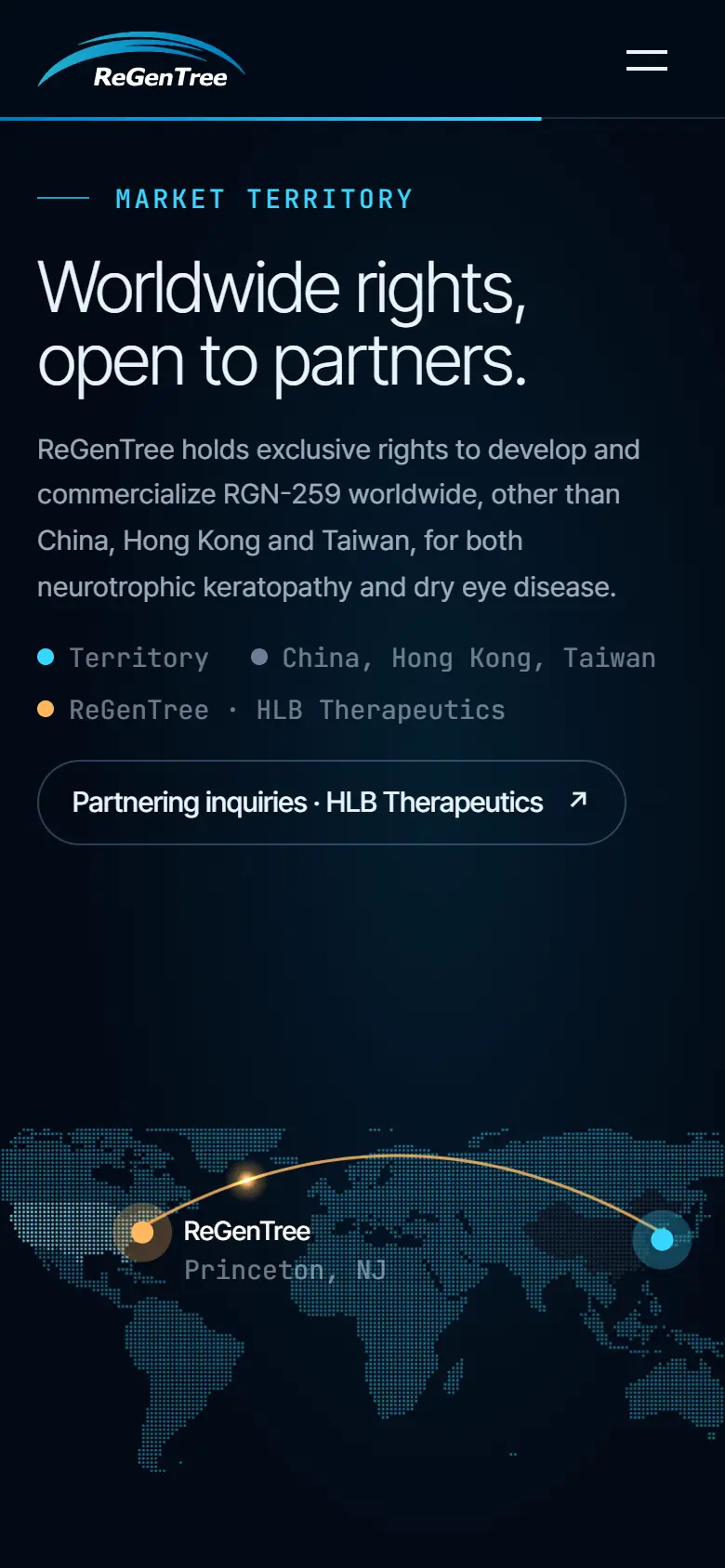
A dot map of worldwide rights excluding China, Hong Kong and Taiwan, with an arc running from Korea to Princeton.
- A logo created by two overlapping circles
ReGenTree's logo appears where the two circles representing HLB Therapeutics and RegeneRx overlap.
FILM · FRAME BY FRAME
Scroll through the video by hand
The October design proposal does not play the video, but selects and draws a frame that matches the scroll position. You can directly flip through the three frames. Drag horizontally across the screen or move the bar below.
Light passes through a tunnel throughout the eye, past the pupil, and reaches the corneal epithelial cells.
Golden peptides flow into the red exposed wound, and cells cover the empty space.
Water droplets form on the tip of the disposable eye drop container and spread when they reach the surface of the water.
001 / 041
SURFACE OF SIGHT PALETTERatio of close pixels for each color in 42 PC screen scenes · Three levels of dark navy blue cover 76% of the screen
10 / PROCESSProcess
How three proposals
became one direction
The three proposals continued by modifying the previous proposal. The table below summarizes how the home screen, color, font, numbers, structure, movement, and mobile changed from January to October. When you scroll down the screen, you go through each line one by one.
ItemR1 · JanuaryR2 · FebruaryR3 · OctoberReason
Home screenEye icon and titleChildren's photo and titleVideo from the eye to the corneal cellsThe eye should be on the home screen of an ophthalmology company.
ColorEight different tones for each pageWhite background and blueCobalt indigo, cyan, and amberThe colors taken from the light of the eye exam tell the story of the company and That's right.
FontEight pairs of fontsOnly InterInter Tight · Pretendard · JetBrains MonoA combination of numbers and clinical stages suitable for many screens.
NumbersUnfounded numbers like 12+ Partners2+ · 10+ · FDA43 · 2 · 35 · FDA, numbers with sourcesOnly confirmed numbers appear on the first screen Leave it.
StructureOne screen with the same frameworkSeven sections in the order of company introductionFourteen scenes in the order of scaleOrganized in the order in which the visitor looks closely.
MovementEffect of appearance upon entryAppearance tailored to scrollingThree videos and fixed scenes that scroll throughThe invisible healing process is explained through movement.
MobileReduced view of PC screenResponsive stacked in one rowCreate a separate video frame for vertical screenEven on mobile phones, eyes and cells fill the center of the screen.
Four things kept
in all three rounds
Although the first screen and movement have changed significantly, the four things below did not change from January to October. This is because no matter which design proposal was chosen, the way the company operated the site had to be the same.
- 01Keep English menu names
English menu names familiar to investors and partners, such as Who We Are and Pipeline, were retained in all three proposals.
- 02Only write sentences with sources
Sentences about diseases and clinical trials have only been copied from what was confirmed on the company website and news titles. Outdated expressions have been replaced with verifiable facts.
- 03Partnership inquiries in one scene
By gathering rights territories (excluding China, Hong Kong, and Taiwan) and partnership inquiries into one scene, visitors looking for collaboration can move on to the next action.
- 04Motion can be turned off
When you turn on “Reduce Motion” on your device, October Design Plan stops video and static scenes and shows all content on a static screen.
Scenes without photos
were made new
The stages of the eye and disease, healing and eye drop scenes are newly created videos and pictures for the October design proposal. The ratio and focus were set for each scene so that they could be changed on the same spot once the actual clinical image or product photo was decided.





11 / COMPONENTSscreen parts
The parts that build
a clinical company’s screens
We collected separately the parts that were used repeatedly in the October design. If you create a screen with the same parts, you can add content without having to redesign it even if a new clinical trial or news comes out.
STATUS BADGE
Phase IIIFDA Orphan Drug · NKCompletedOngoingPlanning
clinical stage badge
Steps and statuses are indicated by badges of the same shape. The color changes depending on the status, and the text is written at a fixed width.
PIPELINE BAR
development stage bar
When you enter the screen, the bar will fill up to the level. Even if the indications increase, just add more lines.
TRIAL CARD
NKPhase III
SEER-2United States · 35 sites4 weeks of treatment, 2 weeks of follow-upNCT05555589 ↗clinical card
Write the clinical name, stage, region, and period in the same order and open the original text with the registration number.
NEWS ROW
- RegeneRxLetter to Stockholders, March 27, 2025↗
- PressHLB Therapeutics gathers 'RGN-259' rights in joint venture↗
a line of news
Sources are identified with tags next to the date, so they can be recognized immediately even if the English shareholder letter and Korean article are mixed.
TRIAL NOTICE · Parts added in this roundup
SEER-2 · Phase IIINeurotrophic keratopathy clinical participation information
One line of clinical participation guidance
Instead of a pop-up that covers the first screen, the same information is delivered through a one-line guide and a dedicated scene at the top of the screen.
DATA READOUT
43amino acids in Tβ4
Data readout
Below the large number, write what number you are counting in monospace letters. Do not enter numbers without a source in this box.
12 / MOBILEMobile
An eye to look into
in the palm of your hand
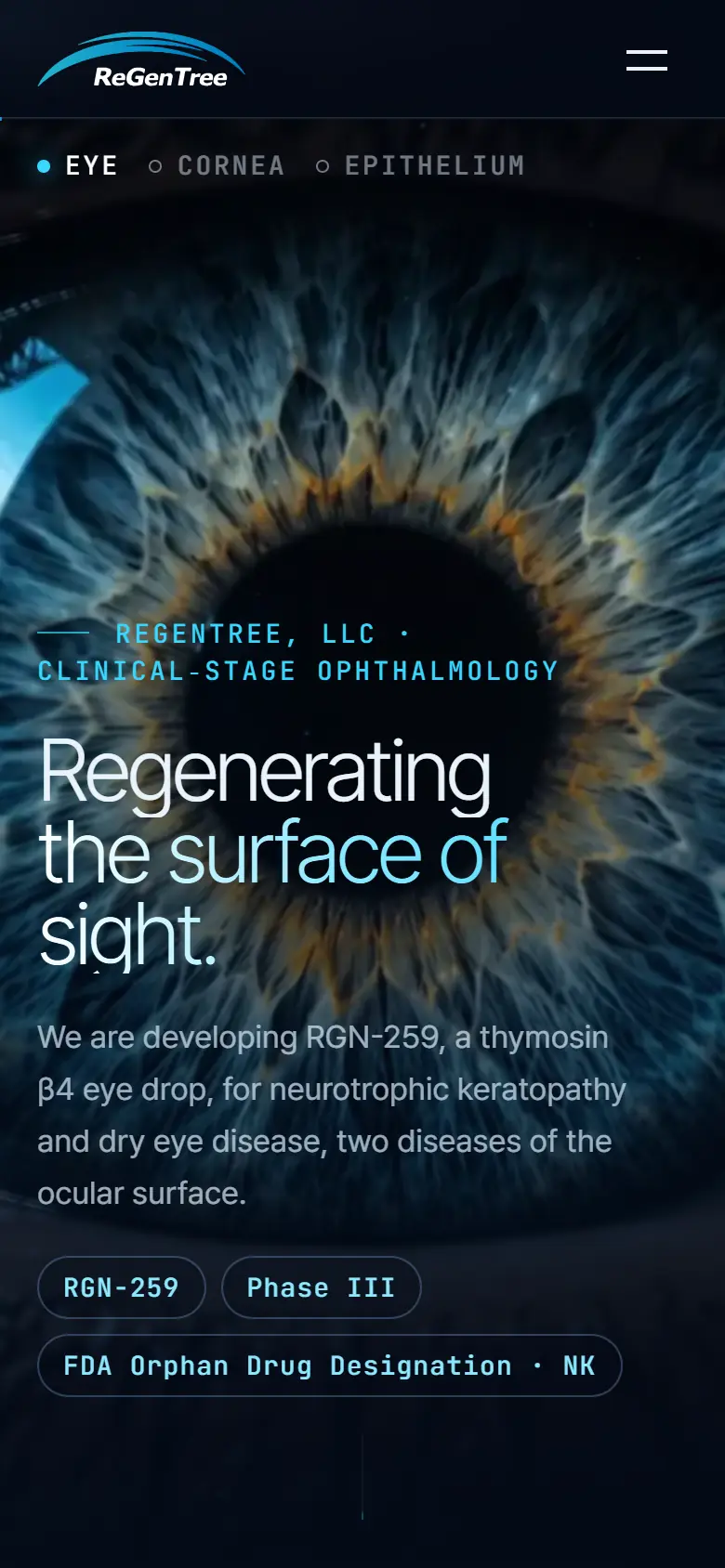
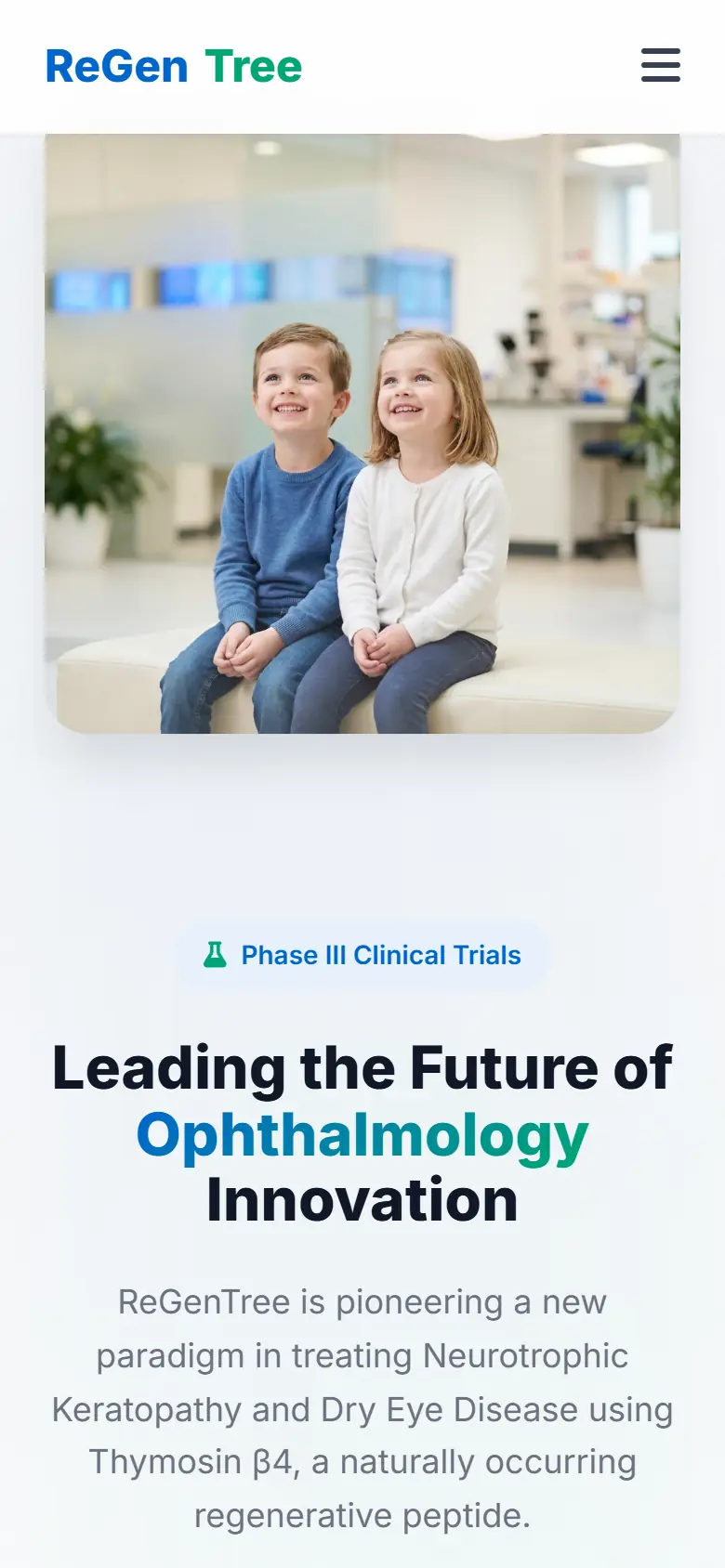
There are many cases where people search for a company for the first time using their cell phone at a conference or while on the move. The February design proposal stacked the same content in one row, and the October design proposal created a separate video frame for the vertical screen, allowing the eyes and cells to fill the center of the screen.
COMPAREHow are the three design proposals different?
Three first screens
for the same company
The three design proposals use the same facts and the same menu name, but the scenes presented to the visitor are different. ReGenTree has organized the differences so you can choose based on the visitors you want to see first on your site.
SeparationR1 · SKETCHESR2 · CLINICAL WHITER3 · SURFACE OF SIGHT
Home screenEye icon and three numbersPhoto of children and three numbersVideo from eye to cell
BackgroundDifferent for each pageWhiteCobalt navy blue, paper color for clinical scenes only
Number of scenesOne screen (eight tones)Seven zonesFourteen scenes
MovementEffect of appearance upon entryAppearance tailored to scrollingThree videos that scroll, five fixed scenes
Amount of data loadedLight screen with only iconsA few photosVideo frame: PC approx. 17MB, mobile phone approx. 10MB (in turn as you get closer)
Visitors who are a good fitResponsible people who want to quickly compare the atmosphereInvestors who want to quickly understand the companyPartners and medical staff who want to understand the disease and its principles
REGENTREE RENEWAL PROPOSAL
Clear,
again
ReGenTree website renewal proposal · SKETCHES · CLINICAL WHITE · SURFACE OF SIGHT
| Item | Detail |
|---|---|
| Sponsor | ReGenTree · ReGenTree, LLC |
| Study | website renewal proposal (English main page) |
| Period | January to October 2026, three times |
| Arm 1 | January · Eight first sketches |
| Arm 2 | February · CLINICAL WHITE |
| Arm 3 | October · SURFACE OF SIGHT |
| Research | 10 pages of the current site · 50 news posts · logo GIF 186×51px |
| Identity | Two arcs of the same curvature · #971A26 · #1FAFCD → #1189C4 |
| Films | Pupil 121 sheets, Healing 97 sheets, Eye drops 121 sheets (based on horizontal screen) |
| Typefaces | Inter Tight · Pretendard · JetBrains Mono |
| Studio | BlueCanvas · Renewal Proposal |
Primary EndpointFind out what the company does on the first screen
CLEAR, AGAIN
Science that is hard to explain,
Science that is hard to explain,
made believable at a glance
So that visitors grasp hard-to-explain stories like clinical trials and molecules on the first screen,
we will design the order of the story with you.
other projects
-
 Biotech · Pharma
HLB Therapeutics
A website renewal proposal for a listed biotech company. The brand reading ties rare-disease drugs and the pharmaceutical cold chain into one sentence. It includes a palette of ink and ice tones with a single drop of red, four proposals, and pipeline and cold-chain screens.
-
 Public institution
Korea Drug Development Fund
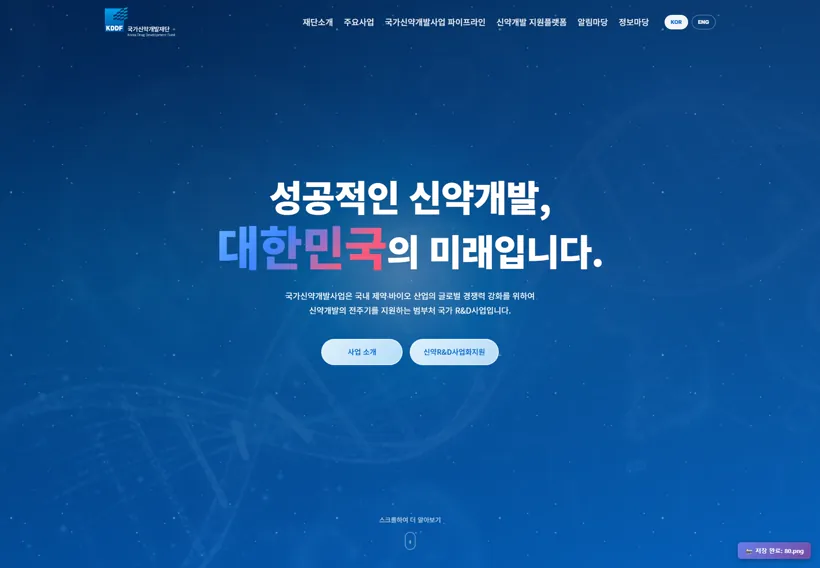
The build and renewal process of a public institution’s website, from user analysis and CI interpretation to nine main-page proposals and pipeline visualization.
-
 Education · Healthcare
Kyungpook National University School of Medicine Centennial
A centennial website renewal proposal for a medical school. The ceremony’s name, “Walking a Century,” becomes the steps of a scroll. It includes two palettes split from the red of the logo, eight artifacts cut out from their backgrounds, a 10-second scroll film, and two proposals, “Walking a Century” and “A Hundred Years of Light Toward Life.”