
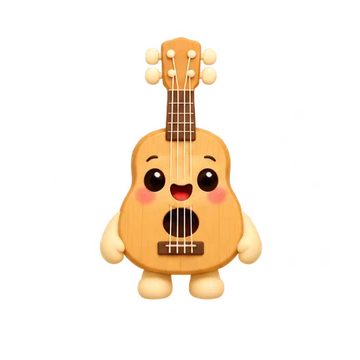
우쿨렐레 UKULELE
마음을 전하는 작은 표정
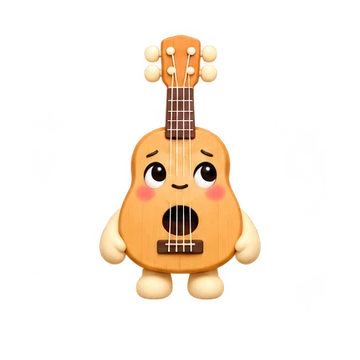
오늘은 어떤 기분이야?
표정을 누르면 크게 볼 수 있어요.
움직임은 위쪽 버튼으로 켜고 끌 수 있어요.
소리와 친해지는 시간
한 줄의 떨림에서
이야기가 시작돼요.
생김새를 관찰하고, 소리가 나는 까닭을 알아봐요.
배경은 연출한 이미지이며 실제 연주 시연은 아니에요.
01 / 작은 음악 교실
몸통과 목, 줄을 찾아봐요
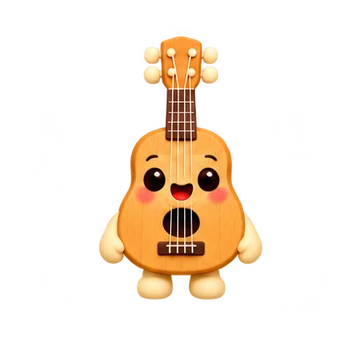
우쿨렐레의 생김새를 살펴봐요.
몸통과 길쭉한 목을 따라 이어지는 줄을 살펴봐요. 얼굴과 손발은 캐릭터에 더한 상상이에요.
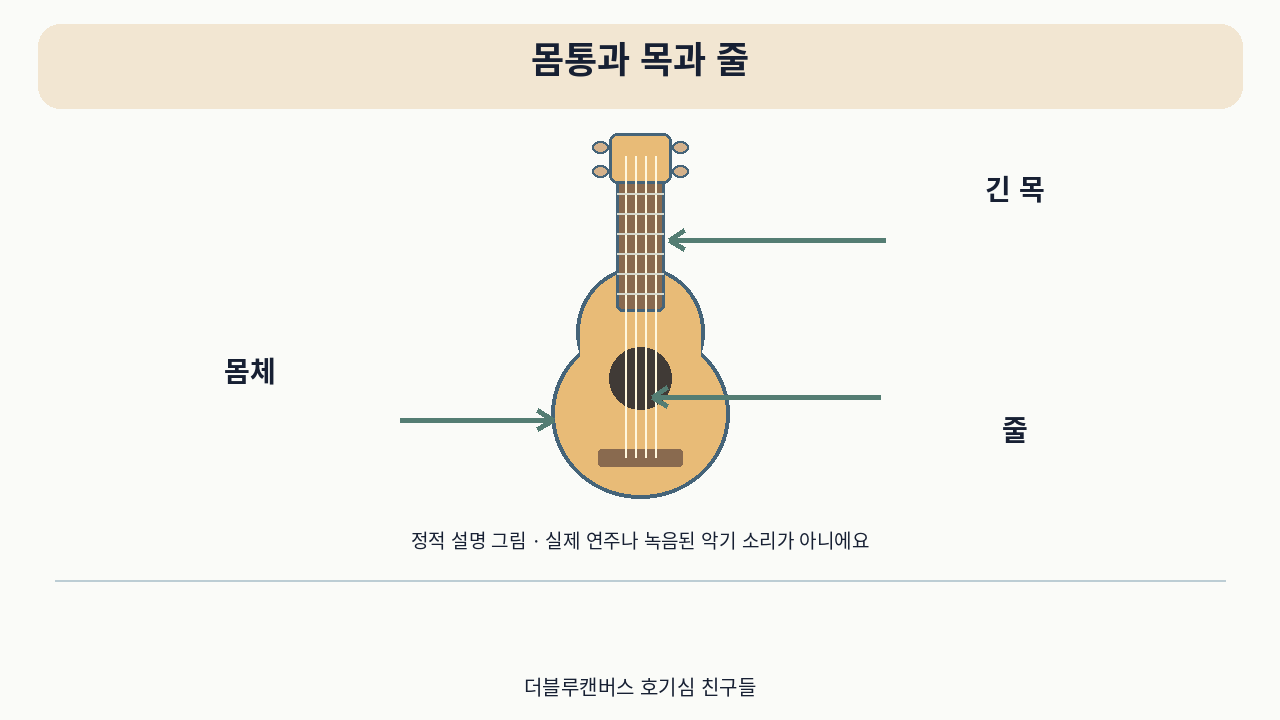
설명 그림 크게 보기 ↗
02 / 작은 음악 교실
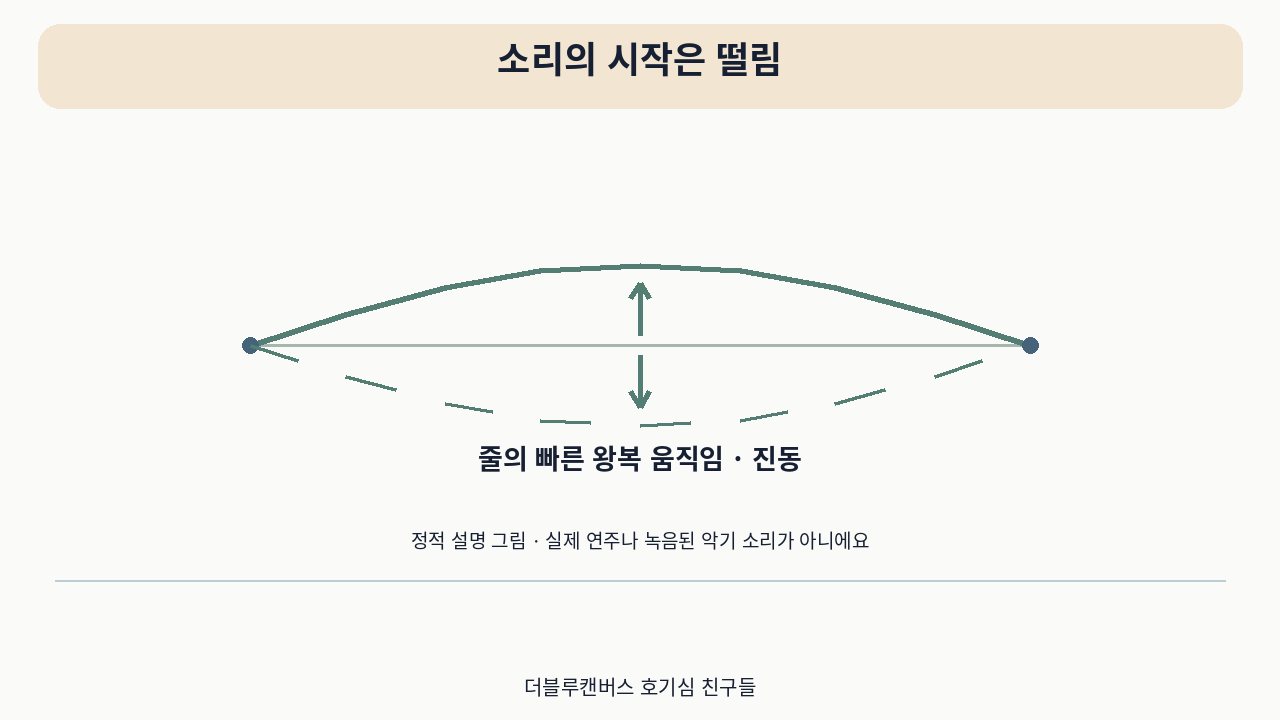
소리의 시작은 진동이에요
소리가 시작되는 작은 움직임.
줄을 튕기면 빠르게 떨려요. 설명 그림으로 이 떨림, 진동을 알아봐요. 실제 연주 시연은 아니에요.

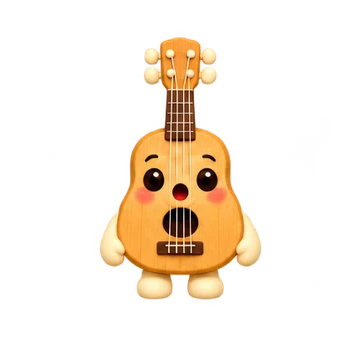
설명 그림 크게 보기 ↗
03 / 작은 음악 교실
하나, 둘, 셋, 넷
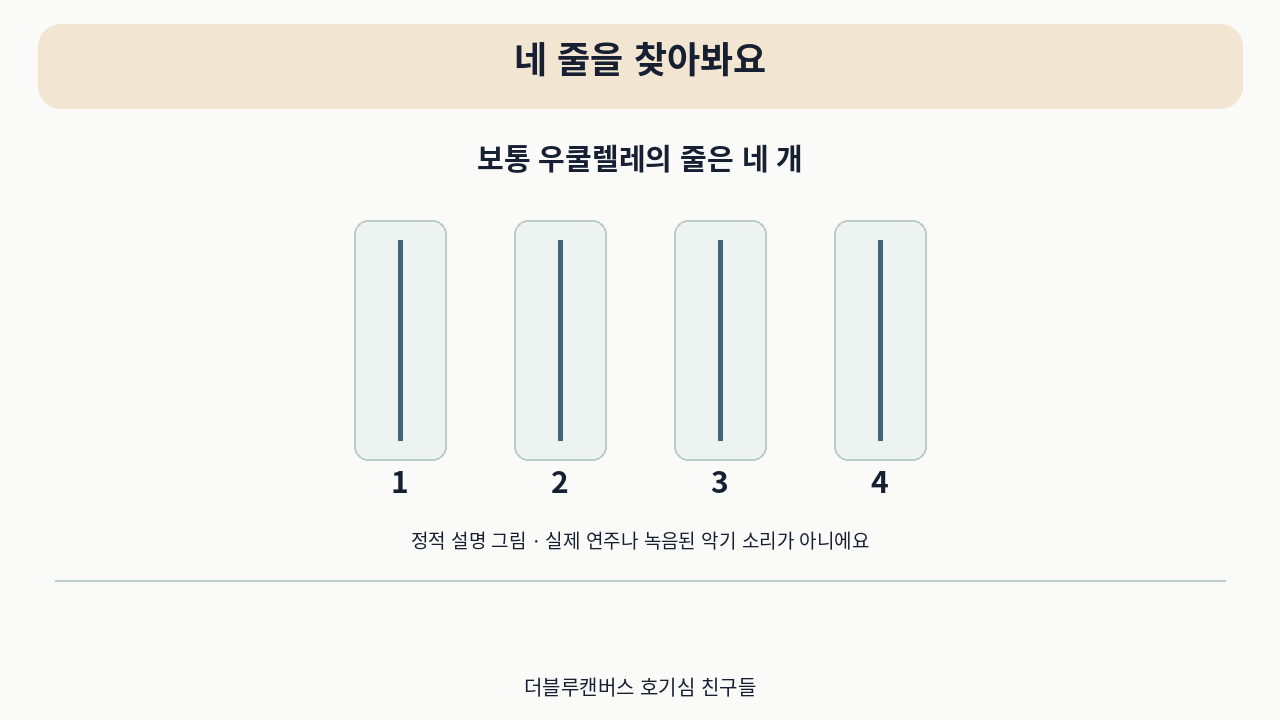
네 줄을 차례대로 세어 볼까요?
흔히 볼 수 있는 우쿨렐레에는 네 줄이 있어요. 그림 속 줄을 차례로 세어 보세요.

설명 그림 크게 보기 ↗
우쿨렐레 소개 영상
한국어 · English · Español · 日本語
자막은 플레이어에서 켜거나 끌 수 있어요.
이야기를 글로 읽어요
한국어 · 우쿨렐레 이야기 전체 글
안녕, 우쿨렐레 친구
안녕, 나는 우쿨렐레 친구야.
오늘은 내 생김새와 소리의 비밀을 알아보자.
실제 연주 대신 설명 그림으로 살펴볼 거야.
그림을 살펴봐요
내 그림에는 나무 무늬의 몸통과 길쭉한 목이 있어.
몸통 앞의 둥근 구멍과 길게 이어진 줄도 보이지?
얼굴과 손발은 캐릭터에 더한 상상이야.
몸통과 목과 줄
우쿨렐레는 줄을 이용해 소리를 내는 악기야.
이 설명 그림에서는 몸통과 목, 줄의 위치를 찾아보자.
줄은 목을 따라 몸통 위까지 이어져 있어.
소리의 시작은 떨림
우쿨렐레의 줄을 튕기면 줄이 빠르게 떨려.
이런 떨림을 진동이라고 불러.
여기 보이는 선은 진동을 설명하는 그림이지 실제 연주는 아니야.
네 줄을 찾아봐요
흔히 볼 수 있는 우쿨렐레에는 줄이 네 개 있어.
설명 그림에서 하나, 둘, 셋, 넷을 찾아보자.
그림의 줄을 세는 것이지 소리를 듣는 문제는 아니야.
악기를 소중히 다뤄요
실제 악기를 만질 때는 먼저 어른에게 도움을 부탁해.
악기를 휘두르거나 줄을 세게 잡아당기지 마.
연주와 줄 조정은 어른과 제품 설명을 확인하며 배워.
생각해 볼까요
우쿨렐레의 줄이 빠르게 떨리는 것을 무엇이라고 할까?
A는 얼기, B는 진동, C는 녹기야.
잠깐 생각하고 하나를 골라 봐.
정답은 진동
정답은 B, 진동이야.
줄의 빠른 떨림이 소리를 만드는 시작이야.
설명 그림으로 배운 내용과 실제 연주를 구별해 보자.
다음에 또 만나요
오늘은 우쿨렐레의 몸통과 줄, 진동을 알아봤어.
실제 악기는 어른과 함께 소중히 다루는 것도 기억해.
함께 알아봐 줘서 고마워, 다음에 또 만나!
English · Our Ukulele Story 전체 글
Hello, Ukulele Friend
Hello, I am your ukulele friend.
Let us explore my shape and how sound begins.
We will use diagrams instead of a live performance.
Look at the Picture
My drawing has a wood-grain body and a long neck.
Can you see the round opening and the strings?
The face, hands and feet are imaginary character details.
Body, Neck and Strings
A ukulele is an instrument that makes sound with strings.
Find the body, neck and strings in this simple diagram.
The strings run along the neck and across the body.
Sound Begins with Vibration
When a ukulele string is plucked, it moves back and forth quickly.
We call this movement vibration.
The lines here explain vibration; they are not a live performance.
Find Four Strings
A typical ukulele has four strings.
Find one, two, three and four in the diagram.
We are counting pictured strings, not listening for a sound.
Treat Instruments with Care
Ask an adult for help before handling a real instrument.
Do not swing it around or pull hard on its strings.
Learn to play and adjust the strings with an adult and the product instructions.
Time to Think
What do we call the quick back-and-forth movement of a ukulele string?
A is freezing, B is vibration and C is melting.
Take a moment to think and choose an answer.
The Answer Is Vibration
The answer is B, vibration.
The string moving quickly is where the sound begins.
Remember the difference between an explanatory diagram and a live performance.
See You Next Time
Today we explored a ukulele body, strings and vibration.
Remember to handle real instruments carefully with an adult.
Thank you for learning with me, and see you next time!
Español · La historia del ukelele 전체 글
Hola, amigo ukelele
Hola, soy tu amigo ukelele.
Vamos a descubrir mi forma y cómo comienza el sonido.
Usaremos dibujos explicativos en lugar de una interpretación en directo.
Mira el dibujo
En mi dibujo hay un cuerpo con vetas de madera y un mástil alargado.
¿Ves la abertura redonda y las cuerdas?
La cara, las manos y los pies son detalles imaginarios del personaje.
Cuerpo, mástil y cuerdas
El ukelele es un instrumento que produce sonido con cuerdas.
Busca el cuerpo, el mástil y las cuerdas en este dibujo sencillo.
Las cuerdas recorren el mástil y pasan sobre el cuerpo.
El sonido empieza con una vibración
Al pulsar una cuerda de ukelele, esta se mueve rápidamente de un lado a otro.
A este movimiento lo llamamos vibración.
Estas líneas explican la vibración; no muestran una interpretación en directo.
Encuentra cuatro cuerdas
Un ukelele típico tiene cuatro cuerdas.
Busca una, dos, tres y cuatro en el dibujo.
Contamos las cuerdas dibujadas; no tenemos que reconocer un sonido.
Cuida los instrumentos
Pide ayuda a una persona adulta antes de manejar un instrumento de verdad.
No lo agites ni tires con fuerza de las cuerdas.
Aprende a tocar y ajustar las cuerdas con una persona adulta y las instrucciones del producto.
Hora de pensar
¿Cómo se llama el movimiento rápido de una cuerda de ukelele de un lado a otro?
A es congelación, B es vibración y C es derretimiento.
Piensa un momento y elige una respuesta.
La respuesta es vibración
La respuesta es B, vibración.
El movimiento rápido de la cuerda es el comienzo del sonido.
Recuerda la diferencia entre un dibujo explicativo y una interpretación en directo.
Hasta la próxima
Hoy exploramos el cuerpo, las cuerdas y la vibración del ukelele.
Recuerda cuidar los instrumentos de verdad con una persona adulta.
¡Gracias por aprender conmigo y hasta la próxima!
日本語 · ウクレレのおはなし 전체 글
こんにちは、ウクレレ
こんにちは、ぼくはウクレレの友だちだよ。
今日はぼくの形と音のひみつを調べよう。
実際に演奏するのではなく、説明用の絵で見ていくよ。
絵を見てみよう
ぼくの絵には木目のある胴と細長いネックがあるよ。
胴の丸い穴と長く伸びる弦も見えるかな。
顔や手足はキャラクターに加えた想像の部分だよ。
胴とネックと弦
ウクレレは弦を使って音を出す楽器だよ。
この簡単な絵で、胴とネックと弦を探してみよう。
弦はネックに沿って、胴の上まで伸びているよ。
音の始まりは振動
ウクレレの弦をはじくと、弦が細かく震えるよ。
このような震えを振動というんだ。
ここにある線は振動を説明する絵で、実際の演奏ではないよ。
四本の弦を探そう
よく見かけるウクレレには四本の弦があるよ。
説明の絵で、一本、二本、三本、四本と探してみよう。
絵の弦を数える問題で、音を聞き分ける問題ではないよ。
楽器を大切にしよう
本物の楽器に触れるときは、まず大人に手伝ってもらおう。
楽器を振り回したり、弦を強く引っ張ったりしないでね。
演奏や弦の調整は、大人と製品の説明を確認しながら学ぼう。
考えてみよう
ウクレレの弦が細かく震えることを何というかな。
Aは凍ること、Bは振動、Cは溶けることだよ。
少し考えて、一つ選んでみよう。
正解は振動
正解はBの振動だよ。
弦の細かな震えが、音の始まりなんだ。
説明用の絵と実際の演奏の違いを覚えておこう。
また会おうね
今日はウクレレの胴と弦、振動について調べたね。
本物の楽器は大人と一緒に大切に扱おう。
一緒に学んでくれてありがとう、また会おうね。
소중하게 다뤄요
줄과 악기는 무리하게 잡아당기지 말아요. 악기 관리와 조율은 어른의 도움을 받아요.